What Are Dildos Made Of?
Last Updated on October 6, 2026 by Nikita
Quick Answer
Dildos can be made from silicone, TPE, TPR, glass, stainless steel, aluminum, hard plastic, PVC, latex, and several less common materials.
See How Dual-Density Silicone Actually Moves
Material descriptions can only tell you so much. This real product video gives a clearer look at the surface, flexibility, and movement of a dual-density silicone dildo.
Why this matters: silicone can range from very soft to relatively firm. Real footage makes those differences easier to understand, especially when comparing flexibility and surface response between materials.
The material affects much more than appearance. It changes how firm or flexible a dildo feels, how much pressure its texture creates, whether it holds heat or cold, which lubricants work with it, and how easily it can be cleaned.
For most people comparing materials, the biggest distinction is between non-porous materials, such as 100% silicone, stainless steel, hard plastic, aluminum, and break-resistant glass, and materials that may be porous, including TPE, TPR, PVC, vinyl, and many rubbery blends. Non-porous surfaces are generally easier to keep clean.
Why Dildo Material Matters
Put a silicone dildo next to a glass dildo of roughly the same size and they can feel like completely different toys.
Silicone gives under pressure. Glass does not. A thick silicone shaft may bend slightly with the body, while a glass or metal dildo transfers almost every movement directly. Add raised ribs to both and those ribs will usually feel more pronounced on the rigid toy simply because the material cannot compress.
Weight changes things too. Stainless steel can feel surprisingly substantial even when the toy itself is not especially large. ABS plastic gives you rigidity without nearly as much weight. TPE can be extremely soft and squeezable.
Then there is temperature. Silicone tends to warm fairly quickly against the body. Glass and metal hold temperature more noticeably, which is one reason they are commonly associated with temperature play.
So when two dildos look almost identical on a product page, the material can still make them behave very differently.
Porous vs. Non-Porous Dildos
Before comparing individual materials, it helps to understand one distinction: porous and non-porous.
A non-porous material has a surface that does not readily absorb liquids or microorganisms. Common examples used for insertable sex toys include 100% silicone, hard plastic, stainless steel, aluminum, and break-resistant glass. These materials are generally easier to wash and maintain.
Porous materials are different. Their structure can retain substances within the material, making them harder to sanitize completely. TPE, TPR, jelly rubber, PVC, vinyl, elastomers, and some silicone blends may fall into this group.
That does not mean every soft or inexpensive dildo needs to go straight into the trash. It does mean you need to know what you own and adjust how you use and care for it.
Using a condom over a porous dildo can create an additional barrier, particularly when sharing a toy or when easier cleanup is important.
And one small detail matters here: “silicone” and “100% silicone” are not necessarily the same description. A manufacturer that clearly identifies its material gives you more useful information than a listing that simply says “soft silicone-like material.”
What Are Dildos Usually Made Of?
Here is the practical version:
| Material | Typical Feel | Flexibility | Porosity | What Stands Out |
|---|---|---|---|---|
| 100% Silicone | Soft to firm | Low to high | Non-porous | Comfortable balance of softness and support |
| TPE / TPR | Soft and squishy | High | Usually porous | Lifelike softness and stretch |
| Borosilicate / Break-Resistant Glass | Very hard and smooth | None | Non-porous | Rigidity and temperature play |
| Stainless Steel | Hard and heavy | None | Non-porous | Weight and very direct pressure |
| Aluminum | Hard but lighter | None | Non-porous | Metal feel with less weight |
| ABS / Hard Plastic | Hard and lightweight | None | Non-porous | Lightweight rigidity |
| PVC / Jelly | Usually soft | Medium to high | Often porous | Lower-cost soft designs |
| Latex / Rubber | Soft and rubbery | Medium to high | Porous | Flexible traditional material |
There are exceptions, blends, coatings, and specialty materials, so the manufacturer’s actual material disclosure should always take priority over assumptions based on appearance.
1. Silicone Dildos
Silicone has become one of the most familiar dildo materials for good reason: it occupies a useful middle ground between very soft materials and completely rigid ones.
But saying a dildo is silicone tells you surprisingly little about how firm it will feel.
One silicone dildo can fold easily in your hand. Another may have a dense core and only flex slightly. Thickness, internal construction, and the firmness of the silicone all change the result.
That variation is part of silicone’s appeal. It can be used for soft realistic designs, curved G-spot shapes, large fantasy toys, textured dildos, suction-cup models, and plenty of other forms without every toy feeling identical.
Good-quality 100% silicone is also non-porous, which makes it easier to maintain than many soft rubbery materials. Planned Parenthood includes 100% silicone among its recommended non-porous materials for insertable toys.
If softness and lifelike detail are your priority, our realistic dildos include designs in materials such as silicone and TPE, each with a different balance of firmness and flexibility.
-
Product on sale
 Ebony Series – Hyper Realistic Black Dildo$73.14 – $94.99
-
Product on sale
 Crimson Beast Series – Knotted Design Dildo$88.34 – $99.74
-
Product on sale
 Small Dual Density Dildo 4.61 Inches InsertableOriginal price was: $58.99.$56.04Current price is: $56.04.
-
Product on sale
 Dual Density Silicone Dildo Dildo 7.48 InchesOriginal price was: $64.99.$61.74Current price is: $61.74.
What does silicone feel like?
Usually warmer and less unforgiving than glass or metal.
A textured silicone dildo also behaves differently from a hard textured dildo. Raised veins, ribs, or bumps can compress slightly as pressure increases rather than staying completely rigid.
That can make silicone a sensible starting point for someone who likes noticeable texture but does not necessarily want the intensity of a hard material.
What lube works with silicone dildos?
Water-based lubricant is the simplest all-around choice and is generally compatible with sex toys. Silicone-based lubricants can damage some silicone toys, so check the care instructions before combining the two.
2. TPE and TPR Dildos
Pick up an especially soft realistic dildo and there is a good chance you are dealing with some form of thermoplastic elastomer or thermoplastic rubber.
TPE stands for thermoplastic elastomer. TPR stands for thermoplastic rubber.
These are broad families of materials rather than one single formula, so two products both marked “TPE” can still feel noticeably different.
Their biggest attraction is softness.
TPE and TPR can stretch, compress, and rebound in ways that rigid materials obviously cannot. Manufacturers can also use different densities within a toy to create a softer exterior around a firmer structure.
This is one reason these materials are common in products designed to imitate the softness and give of skin.
There is a tradeoff.
TPE and TPR may be porous, making them harder to sanitize than non-porous materials. Planned Parenthood specifically lists both among materials that may absorb germs even after routine washing.
That makes care especially important. Wash according to the manufacturer’s instructions, let the toy dry completely, store it separately, and consider using a condom over it when sharing.
Another practical issue is storage. Very soft toys can sometimes react with other soft materials when left touching for long periods. Individual storage bags or containers are useful even when the toys look perfectly clean.
3. Glass Dildos
Glass sounds fragile until you actually handle a properly made glass dildo.
Sex toys in this category are typically made from strong, break-resistant glass rather than ordinary drinking-glass material. Planned Parenthood specifically identifies break-resistant glass as one of the non-porous materials used for insertable toys.
The real reason people choose glass, though, is not simply durability.
It is rigidity.
Glass does not bend around pressure. A curved tip remains curved. A raised ridge remains raised. When you change the angle of the toy, that movement is transferred very directly.
That makes comparatively subtle shapes feel more noticeable than they might in soft silicone.
Glass is also naturally smooth, which can make a well-polished toy glide easily with sufficient lubricant.
For those who prefer a completely rigid feel, glass dildos offer smooth surfaces, defined pressure, and noticeable temperature changes.
-
Product on sale
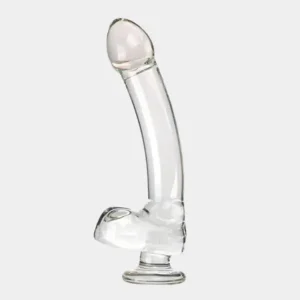 Large smooth glass dildo Dildo 10 inchOriginal price was: $39.99.$37.99Current price is: $37.99.
-
Product on sale
 Anesidora Rose Quartz Sex Toy$66.49 – $142.49
-
Product on sale
 Rhea – Quartz Dildo Natural Pink 7.2 InchOriginal price was: $104.99.$99.74Current price is: $99.74.
-
Product on sale
 Translucent Tentacle Crystal Glass DildoOriginal price was: $39.99.$37.99Current price is: $37.99.
Why are glass dildos used for temperature play?
Glass can be warmed or cooled before use and retains the temperature change more noticeably than soft silicone.
The goal should be pleasantly warm or cool—not extreme heat or cold. Sudden or excessive temperature changes are unnecessary.
Inspect a glass dildo before use as well. A quality piece should have a smooth, intact surface without chips, cracks, or sharp edges. “Break-resistant” is a much more realistic description than “unbreakable.”
4. Metal Dildos
Metal changes the experience before the toy is even inserted.
You notice the weight immediately.
Stainless-steel dildos can feel considerably heavier than silicone, glass, or plastic products of similar dimensions. That weight can create pressure with less deliberate force from the hand.
Like glass, metal has virtually no flex. Curves and pronounced heads stay exactly where they are, which makes controlled positioning one of the main reasons people choose it.
Metal also responds well to temperature changes.
Because the material is so firm, however, sizing deserves more attention. A diameter that feels manageable in soft silicone may feel more demanding when the same dimensions are reproduced in solid metal.
Stainless steel and aluminum are both recognized as non-porous materials used for body-safe insertable toys.
They are not identical, though. Aluminum is much lighter, so someone interested in a rigid metallic surface without the substantial weight of stainless steel may prefer it.
If you prefer more weight and completely rigid pressure, metal dildos offer a firmer feel along with noticeable temperature play.
5. Hard Plastic and ABS Dildos
Hard plastic does not get nearly as much attention as silicone or glass, but it has a useful characteristic of its own:
rigidity without much weight.
ABS is a hard plastic commonly used for sex-toy shells and other firm components. Unlike TPE or silicone, it does not squish under pressure.
That means a curved ABS toy can provide very defined pressure while remaining much lighter in the hand than stainless steel.
Smooth hard plastic is also considered a non-porous option for insertable sex toys.
You are more likely to see ABS used in vibrators or mixed-material toys than in a traditional one-piece dildo, but it is still worth understanding because many products described broadly as “silicone toys” actually have silicone contact surfaces over rigid plastic structures.
6. PVC and Jelly Dildos
“Jelly” is more of a marketplace description than a precise material specification.
Many jelly-style toys use softened PVC or related rubbery compounds. They are usually flexible, inexpensive, and easy to manufacture in bright colors and unusual shapes.
PVC itself is naturally rigid, so plasticizers can be added when manufacturers want a softer, more flexible product. Phthalates are one group of chemicals historically used as plasticizers in PVC, although formulations vary considerably. The FDA describes ortho-phthalates as chemicals commonly used to make PVC softer and less brittle.
This is one reason vague material descriptions deserve some caution.
A label saying nothing more than “jelly” does not tell you exactly what formulation you are getting.
PVC, vinyl, and jelly rubber may also be porous.
When choosing a toy that will be used internally, we would rather see a manufacturer tell us exactly what the contact material is than rely on broad terms such as “premium jelly” or “skin-feel material.”
For a closer look at softer budget-friendly options, our guide to the best jelly dildos compares different designs, textures, and practical tradeoffs.
7. Latex and Rubber Dildos
Latex dildos were more common before silicone became so widespread.
Latex can produce a flexible, slightly springy toy and is relatively easy to form into different shapes. The surface tends to feel more rubbery than silicone.
The obvious limitation is that some people have latex allergies or sensitivities.
Latex and various rubber materials can also be porous, which makes them less straightforward to maintain than smooth non-porous alternatives.
If a product is simply described as “rubber,” look for more information. Rubber is an extremely broad term and tells you less about the actual formulation than a specific material name would.
What About Crystal, Stone and Ceramic Dildos?
This is where shopping by material name alone stops working particularly well.
A beautiful piece of polished stone may look ideal in a product photo, but appearance cannot tell you whether the material contains natural fissures, whether the surface treatment is durable, or whether the item was actually manufactured for internal use.
The same goes for products marketed as “crystal massagers.”
The word crystal tells you what something looks like or what mineral it may contain. It does not automatically tell you that the finished object is suitable as a dildo.
Surface quality matters just as much as the base material.
For any rigid specialty dildo, check for a completely smooth finish, chips, cracks, rough seams, sharp edges, or damage before use. Products intended and manufactured specifically as sex toys are preferable to decorative objects that happen to have a similar shape; Planned Parenthood likewise recommends using products specifically designed as sex toys rather than improvised objects that may break or contain rough or unsafe components.
What Are Realistic Dildos Made Of?
Most soft realistic dildos are made from silicone, TPE, TPR, or related elastomeric materials.
Silicone is usually easier to clean when it is 100% silicone and provides a wide range of firmness levels.
TPE and TPR can be made considerably softer and more compressible, which is why they are commonly used when a manufacturer wants more “give.”
This creates an interesting tradeoff:
A material that feels more skin-like is not automatically the easiest material to maintain.
That is why buying purely by softness does not make much sense. Decide which characteristic matters more to you—softness, flexibility, easy cleaning, durability, weight, or rigidity—and then choose the material.
How Can You Tell What a Dildo Is Made Of?
You cannot reliably identify a dildo just by touching it.
Silicone, TPE, TPR, PVC, and other elastomers can be formulated to look and feel surprisingly similar.
Start with the product information instead.
Look for specific descriptions such as:
100% silicone
TPE
TPR
ABS
stainless steel
aluminum
borosilicate glass
A vague phrase such as “premium soft material” tells you very little.
Strong chemical odors, an oily surface, or unexpected deterioration can be reasons to stop and investigate the product, but they are not reliable home tests for identifying an exact material.
Clear manufacturer disclosure is much more useful.
Which Dildo Material Should You Choose?
There is no single material that gives everyone the best experience.
Think about the sensation you actually want.
Choose silicone if:
You want some flexibility, a softer surface, easy maintenance, and a large range of shapes and firmness levels.
Choose TPE or TPR if:
Your priority is softness, stretch, or a more compressible realistic feel and you are comfortable giving the toy additional attention during cleaning and storage.
Choose glass if:
You want a very smooth, completely rigid toy where curves and textures remain highly defined.
Choose stainless steel if:
You like substantial weight, firm pressure, rigidity, and temperature play.
Choose aluminum if:
You want the rigidity and cool surface of metal without as much weight.
Choose hard plastic if:
You want defined pressure from a rigid toy while keeping it relatively lightweight.
The important point is not to chase whichever material is marketed as “best.”
A soft dildo and a hard dildo can solve completely different problems.
Does Dildo Material Change How Texture Feels?
Absolutely.
This is one of the easiest differences to overlook when shopping online.
Imagine the same raised rib molded into three materials.
On soft TPE, the rib can compress significantly.
On silicone, it may flex but still remain noticeable.
On glass, it cannot compress at all.
The shape is technically the same, yet the sensation can be dramatically different.
That is why measurements and surface design should never be considered separately from material.
For beginners, a pronounced texture on a softer material may feel more forgiving than the same design reproduced in glass or metal.
Which Dildo Materials Work With Which Lubes?
Water-based lubricant is the easiest default because it is generally compatible with sex toys and condoms.
For silicone dildos, check before using silicone-based lubricant. Silicone lubricant can damage some silicone toys, and manufacturers may give specific compatibility instructions.
Glass, stainless steel, and compatible hard plastics give you more flexibility because there is no soft silicone surface to interact with silicone lubricant.
TPE, TPR, PVC, and specialty materials vary more, so the manufacturer’s instructions are especially useful.
When in doubt, water-based lube keeps the decision simple.
How Should Different Dildo Materials Be Cleaned?
There is no single cleaning method that should automatically be used for every dildo.
For routine care, follow the manufacturer’s instructions for that exact product. Planned Parenthood recommends cleaning toys and specifically notes that care instructions can differ by material and construction.
A simple approach is:
- Wash before and after use.
- Use mild soap and warm water when the manufacturer allows it.
- Rinse away residue thoroughly.
- Let the toy dry completely before storage.
- Store clean toys away from dust.
- Keep soft materials separated if their manufacturer recommends it.
- Do not boil, bleach, or place a toy in a dishwasher unless its care instructions specifically say the material and construction can handle it.
Electronic dildos and vibrating toys need additional care because waterproof ratings and charging components may change how they can be washed.
If a porous dildo is being shared, using a fresh condom over it can provide an additional barrier.
When Should You Replace a Dildo?
A dildo does not need replacing simply because it is old.
Its condition matters more.
Pay attention to changes such as:
- Tears or deep cuts
- Cracks or chips
- Peeling surfaces
- Permanent tackiness that was not present originally
- Material that has started breaking down
- Rough areas that cannot be smoothed or cleaned
- Persistent odor after proper cleaning
- Damage around seams or internal components
Glass and metal toys can last a long time when they remain undamaged, while very soft materials may show wear sooner.
Once a surface becomes damaged enough that it is difficult to clean—or no longer feels smooth against the body—it is usually time to retire the toy.
FAQ
What is the safest material for a dildo?
There is no single universally best material, but 100% silicone, stainless steel, aluminum, hard plastic, and break-resistant glass are common non-porous choices that are easier to keep clean.
Are silicone dildos porous?
A dildo made from 100% silicone is non-porous. Silicone blends may be different, so check the manufacturer’s material description.
Are TPE dildos safe?
TPE is widely used in sex toys, particularly soft realistic designs, but it may be porous. Follow the manufacturer’s cleaning instructions and consider using a condom over the toy when sharing it.
Are glass dildos safe?
Purpose-made, break-resistant glass dildos with smooth, undamaged surfaces can be used as insertable toys. Inspect them for cracks or chips before use.
What are realistic dildos usually made of?
Most soft realistic dildos use silicone, TPE, TPR, or similar elastomeric materials.
Can I use silicone lube with a silicone dildo?
It is better to check the manufacturer’s instructions first because silicone-based lubricant can damage some silicone toys. Water-based lubricant is the easiest broadly compatible choice.
Is silicone better than TPE?
Neither is better for every person. Silicone is generally easier to clean, while TPE can be softer and more compressible. The better choice depends on which characteristic matters more to you.