Waterfall Sex Position: How to Make It Work
Last Updated on September 16, 2026 by Nikita
Quick Answer
The waterfall sex position is a receiver-on-top position where the penetrating partner lies face-up near the edge of a bed, with the head and part of the upper body extending beyond the mattress. The receiving partner straddles them from above and controls most of the movement.
What makes the position unusual is not simply deeper penetration. It changes the pelvic angle, gives the partner on top more control over depth and pace, and puts the lower partner in a dramatically reclined position.
The easiest way to make Waterfall work is to start with only a slight drop over the mattress edge. A comfortable bed height, good shoulder and back support, and slow movements matter much more than trying to recreate an extreme-looking photo.
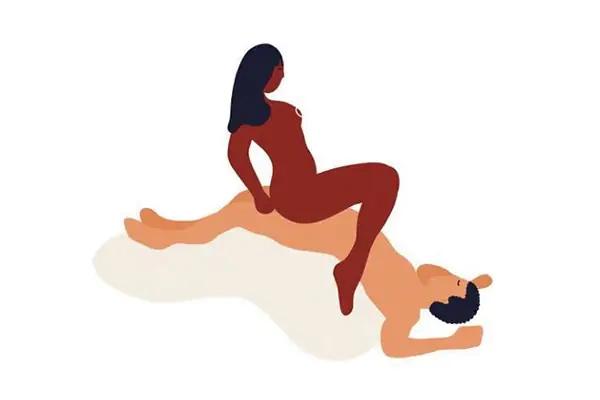
Why Does the Waterfall Position Feel Different?
At first glance, Waterfall looks like someone simply moved cowgirl too close to the edge of the bed.
In practice, the change in body angle can make it feel quite different.
When the lower partner reclines beyond the edge of the mattress, their pelvis and torso no longer sit in the same alignment as they would lying flat. Meanwhile, the partner on top can change their own hip angle by leaning forward, sitting more upright, or shifting slightly toward the knees or chest.
Those small changes can alter where pressure is felt during penetration.
This is why I would not describe Waterfall simply as a “deep penetration position.” It can allow deeper penetration for some couples, but depth is not really the defining feature.
The bigger advantage is control over angle.
The partner on top can shorten the movement, grind instead of bouncing, or change position by only a few centimeters until the angle feels right. That tends to work better than trying to make every movement as deep as possible.
There is also the obvious head-down sensation for the lower partner. Some people enjoy the temporary head rush; others find it distracting or uncomfortable. It should be treated as a side effect of the position rather than the main reason to do it.

How to Do the Waterfall Sex Position
The setup is not complicated, but going directly from lying flat to dramatically hanging off the bed is where people usually make it unnecessarily difficult.
1. Start in a Normal Receiver-on-Top Position
Have the penetrating partner lie face-up on the bed while the receiving partner straddles them normally.
Do not start at the edge.
Get comfortable and find an angle that already works before moving anywhere.
This makes the transition much easier because you are adjusting an existing position instead of trying to line everything up while one person is hanging backward.
2. Move Toward the Edge Gradually
The lower partner can slowly move their shoulders toward the edge of the mattress.
Start by letting only the head extend slightly beyond the bed.
There is no requirement for the entire upper torso to hang downward.
In fact, for a first attempt, keeping most of the shoulders supported usually feels much more stable.
3. Let the Partner on Top Set the Angle
Once both partners feel secure, the receiving partner can sit upright, lean forward, or move their hips slightly backward or forward.
Do this in small increments.
An inch of movement can change the angle surprisingly quickly in this position.
This is one reason aggressive movement usually works worse than controlled movement here.
4. Keep the Lower Body Stable
The lower partner should not feel as if they are slowly sliding off the mattress.
If that happens, move farther back onto the bed rather than trying to hold the position using the neck or shoulders.
Depending on body proportions and bed height, the lower partner may also find it easier to keep the feet planted on the mattress or use the legs for additional stability.
5. Come Out of the Position Slowly
This part tends to get ignored in illustrations.
Don’t finish and immediately sit straight up.
Move the shoulders back onto the mattress first, pause, and then return to a normal lying or seated position.
If the lower partner feels lightheaded, stop the position and allow the sensation to pass before standing.
The Bed Height Matters More Than You Think
Waterfall is one of those positions where furniture can make the difference between “surprisingly comfortable” and “why are we doing this?”
A very tall mattress creates a much steeper drop.
A low bed or firm sofa can create a much gentler angle.
That means two couples can technically perform the exact same position and have completely different experiences simply because their beds are different heights.
For most first attempts, less drop is better.
You do not need the shoulders touching the floor. You do not even need the shoulders completely off the mattress.
The recognizable Waterfall angle can be created with a relatively small decline.
If the bed edge presses uncomfortably into the upper back, move farther onto the mattress or place firm support beneath the upper back so the body transitions more gradually over the edge.
The Biggest Waterfall Mistake: Chasing the Photo
Sex-position illustrations have a bad habit of making every position look like a gymnastics pose.
Waterfall suffers from this more than most.
People see an illustration with someone’s torso dramatically cascading toward the floor and assume that is the position they need to reproduce.
It isn’t.
The purpose of the position is to change the angle while keeping the upper partner in control. Hanging farther off the bed does not automatically make the position better.
Usually it just adds more strain.
A much better approach is to begin with a shallow Waterfall and increase the decline only if both partners actually prefer it.
How to Make the Waterfall Position Feel Better
Once the basic position works, small adjustments matter more than dramatic ones.
Try slower hip movements first. Because the angle is already unusual, short rocking or grinding movements may feel more controlled than large vertical movements.
Experiment with torso position. The partner on top can lean forward for more body contact or sit more upright to change the pelvic angle.
Use lubrication when needed. Changing angles can change friction as well. If movement starts feeling draggy rather than smooth, adding lubricant is usually more useful than simply moving harder.
Support the upper back, not just the neck. A pillow directly beneath a hanging head can push the neck into an awkward angle. If support is needed, positioning the body so the shoulders and upper back transition comfortably off the mattress is usually more important.
And keep talking.
Waterfall is a position where “a little higher,” “move back slightly,” or “stay right there” is genuinely useful information.
Toys That Work Well With the Waterfall Position
The Waterfall position gives the receiving partner more control over angle and movement, which makes it a good match for wearable couples vibrators that can add extra stimulation without changing the position. For a smoother experience, a quality water-based lubricant can also help reduce friction when adjusting angles. Couples who enjoy experimenting with different positions may also benefit from a wedge positioning pillow to improve support and comfort.
-
Product on sale
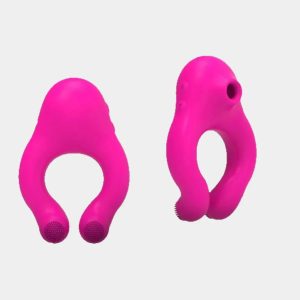 Anesidora Clit Sucking Cock RingOriginal price was: $44.99.$40.49Current price is: $40.49.
 -
Product on sale
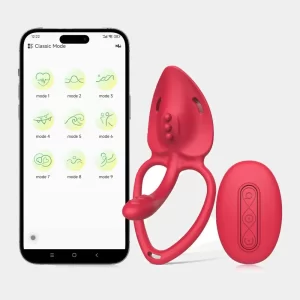 Anesidora Rose APP Controlled Couples Vibrator$33.29 – $35.99
 -
Product on sale
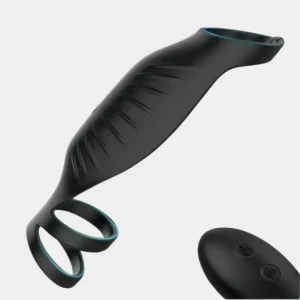 Semensentry – 9 Automatic Penis SleeveOriginal price was: $47.99.$43.19Current price is: $43.19.
 -
Product on sale
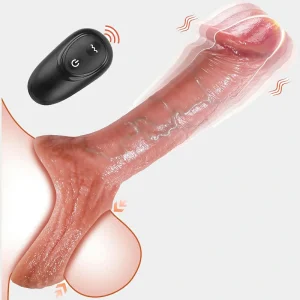 Grant – Vibrating Penis SleeveOriginal price was: $36.99.$33.29Current price is: $33.29.
Is Waterfall Good for G-Spot or P-Spot Stimulation?
Potentially, but there is no universal Waterfall angle that automatically targets a particular spot.
Changing pelvic tilt can change which areas receive pressure during penetration, which is why some people may find this position useful when experimenting with anterior-wall or prostate stimulation.
But anatomy varies considerably.
Instead of trying to reproduce a diagram exactly, use the position as an adjustable starting point.
The person on top can change the sensation by:
- leaning slightly forward or backward;
- moving the hips closer to or farther from the partner’s torso;
- using shorter rather than deeper movements;
- changing the angle before increasing intensity.
That usually produces better results than assuming “deeper equals better.”
Three Waterfall Variations Worth Trying
You do not need to use the most dramatic version.
Shallow Waterfall
Keep the shoulders almost completely supported by the mattress and allow only the head or upper shoulders to extend beyond the edge.
This is the version I would start with.
You still get the altered body angle without making the lower partner feel as though they are hanging from the bed.
Supported Waterfall
Move farther onto the mattress and use firm support underneath the upper back or torso to create a gradual decline.
This sacrifices some of the dramatic appearance but makes maintaining the angle much easier.
For longer sessions, it is often the more practical option.
Reverse-Facing Waterfall
The partner on top turns around and faces the lower partner’s legs instead.
The basic geometry remains similar, but the pelvic angle changes considerably.
Because visual communication is reduced, start slowly and make sure both partners can signal easily if the angle becomes uncomfortable.
Who Might Not Enjoy the Waterfall Position?
Waterfall is probably best for couples who already feel comfortable with receiver-on-top positions and want to experiment with a different angle.
It may be less appealing if the lower partner dislikes inverted positions or already experiences neck, back, balance, or dizziness problems.
Anyone who starts feeling dizzy, nauseated, uncomfortable, numb, or unusually pressured in the head should return to a normal position rather than trying to stay there.
The position also does not need to last very long.
Waterfall works better as something you move into and out of than as a position you feel obligated to maintain for an entire session.
What is the Waterfall sex position?
The Waterfall is a receiver-on-top position where the penetrating partner reclines near the edge of a bed with the head or upper torso extending beyond the mattress while the receiving partner straddles them.
Is the Waterfall sex position difficult?
It is moderately challenging, mainly because of balance and the bed-edge setup. A shallow version with the shoulders mostly supported is considerably easier.
Does Waterfall allow deeper penetration?
It can for some couples, but its main advantage is the different pelvic angle and the amount of depth control available to the partner on top.
Do you need to hang your whole upper body off the bed?
No. A slight decline is enough. Keeping more of the shoulders and back supported is often more comfortable.
What should you do if you feel dizzy?
Stop the position, move fully back onto the mattress, and return upright gradually. Do not try to push through dizziness.
If you enjoy exploring different angles and setups, you can also discover more ideas in our complete guide to sex positions for couples, featuring a variety of positions with different levels of intimacy, control, and difficulty.