What Is Impact Play?
Quick Answer
Impact play is a type of consensual adult BDSM activity where one person uses their hand or a tool to create sensation on the body through tapping, spanking, or striking. Some people enjoy it because of the physical sensation, the trust it requires, and the emotional intensity it can create. At its core, impact play is not about “just hitting.” It is about consent, communication, body awareness, and respecting limits.

What Is Impact Play, Really?
When people first hear the term “impact play,” they often imagine something extreme. In reality, that is not always the case.
Impact play is a broad category. It can mean something as simple as a light slap or playful spanking between consenting adults, or it can involve tools such as paddles, floggers, or crops. The intensity varies a lot from person to person. For some, it stays soft and teasing. For others, it becomes part of a more structured BDSM dynamic. Either way, the defining feature is the same: one person creates controlled impact on another person’s body, and both people agree to it in advance.
What matters most is not the tool. It is the agreement behind it.
That is the part many beginner articles miss. Impact play is not “sexy” just because it looks dramatic. What makes it meaningful for many adults is the mix of anticipation, vulnerability, trust, and control. The physical sensation is only one part of it.
Why Do Some Adults Like Impact Play?
There is no single answer, and I think that is important to say clearly.
Some adults enjoy impact play because they like the contrast between sting and warmth. Others are more interested in the emotional side: the feeling of surrender, the sense of authority, or the closeness that can come from intense trust. Some enjoy the ritual of it, including discussion beforehand and reassurance afterward. Others simply find that it adds variety to their intimate life.
It is also common for people to discover that they do not enjoy it at all. That is normal too.
A lot of public discussions make it sound like impact play is either automatically exciting or automatically harmful. The truth is more nuanced. For some adults, it can be a consensual part of intimacy. For others, it is not appealing, not comfortable, or not emotionally right for them. Neither reaction is wrong.

Impact Play Is Not the Same as Random Roughness
This distinction matters.
Healthy impact play in an adult context is discussed beforehand, agreed to clearly, and stopped when needed. It is not about ignoring discomfort, pushing someone past their limit, or assuming that “rough” always means enjoyable. It also is not an excuse to skip communication.
In my view, one of the clearest signs of a mature approach is that the people involved talk more than they perform. They discuss boundaries, health concerns, emotional triggers, and what each person actually wants out of the experience. That may sound less exciting than the fantasy version, but in practice it is what separates consensual play from carelessness.
Consent Comes First
If someone remembers only one thing about impact play, it should be this: consent is the foundation.
Consent in this context should be active, informed, and ongoing. That means both adults understand what they are agreeing to, both feel free to say no, and both know they can stop or change direction at any time. Silence is not enough. Assumptions are not enough. Past experience is not enough.
It also helps to talk in plain language. Instead of vague questions, adults should be able to say what feels okay, what feels off-limits, and what they are unsure about. Clear communication may feel awkward at first, but it is a lot less awkward than dealing with fear, injury, or emotional fallout later.
Why Communication Matters More Than Confidence
Many beginners worry about “doing it wrong.” That is understandable, but confidence is less important than communication.
Someone can own fancy tools and still be careless. Another person can be completely new and still be responsible, attentive, and safe. Experience does not automatically equal skill. A calm, honest conversation often matters more than trying to look experienced.
One practical reason communication matters is that bodies and preferences differ. What feels mild to one person may feel overwhelming to another. What sounds exciting in theory may feel different in real life. Checking in before, during, and after helps both adults stay grounded in what is actually happening, not what they assumed would happen.
Common Tools People Associate With Impact Play
People usually start by thinking about the hand, and that makes sense. It is familiar, easy to control, and less intimidating than specialized gear.
Beyond that, common tools in adult BDSM spaces include paddles, floggers, and riding crops. Each one creates a different kind of sensation. Some feel broader and heavier. Others feel sharper or more focused. Material also changes the experience. Leather, silicone, wood, and softer synthetic materials can all feel very different.
That said, tools should never be treated like the main event. A tool is only as safe as the person using it. I think beginners sometimes get distracted by shopping and overlook the bigger issue, which is whether they actually understand consent, body safety, and emotional readiness.
Explore Anesidora Spanking Paddles & Whips Collection 、Bondage Gear Here
-
Product on sale
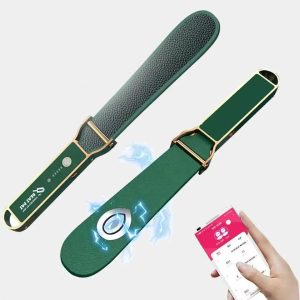 Qiui Beat Pat – E Stim Spanking PaddlesOriginal price was: $110.99.$99.89Current price is: $99.89.
 -
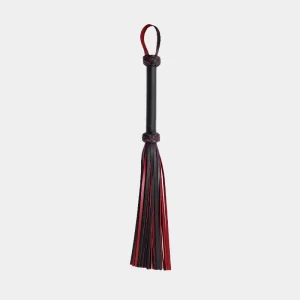 Finger Flogger – Beginner-Safe Bdsm Toy
 -
Product on sale
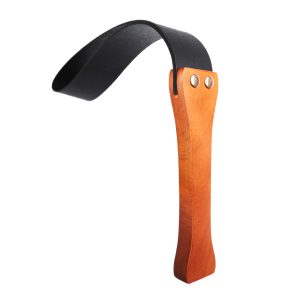 Spanker Sex – Leather Bdsm Whip Wooden HandleOriginal price was: $33.99.$30.59Current price is: $30.59.
 -
Product on sale
 Spiked Paddle Bdsm Leather DesginOriginal price was: $26.99.$24.29Current price is: $24.29.
You May Also Read :
7 Best Bondage Sets & BDSM Kits
Body Safety Matters
This is where neutral education matters more than fantasy.
Not every part of the body is equally safe for impact. Bony areas and vulnerable regions carry more risk than fleshy areas. The spine, neck, head, joints, kidneys, and lower back are commonly treated as higher-risk zones and should not be treated casually. Pre-existing injuries, chronic pain, certain medical conditions, bruising tendencies, and medications can also affect safety.
That is why body awareness matters so much. Impact play should never be approached like a guessing game. If someone does not understand the risks, the safest choice is to slow down and learn more before trying anything intense.
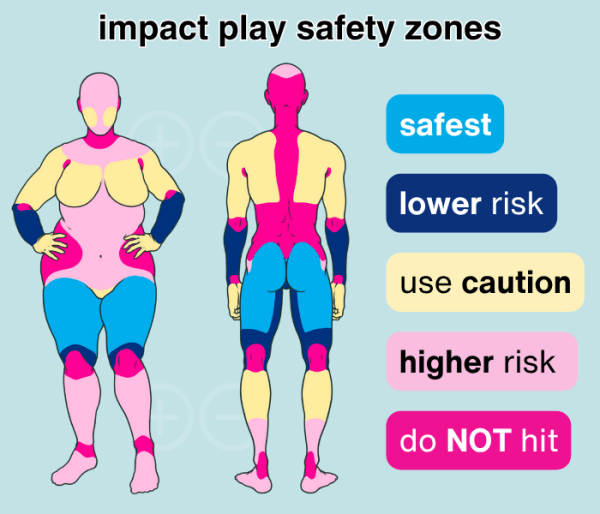
Impact Play Safety Zones
One of the most important parts of any discussion about impact play is understanding safety zones. Not every area of the body handles force in the same way. Some parts have more muscle and padding, while others protect bones, joints, nerves, or vital organs. That is why body placement matters just as much as consent and communication.
In general, safety charts are meant to show lower-risk areas, areas that require caution, and areas that are considered high-risk or off-limits. Fleshier parts of the body are usually discussed as lower-risk, while areas such as the head, neck, spine, joints, and places near major organs are treated as much more vulnerable. Even so, no chart should be treated as a guarantee of safety. Bodies vary, pain tolerance varies, and medical history matters.
I think this is where many beginners get the wrong idea online. They see a simple color-coded diagram and assume it makes everything easy. It does not. A chart can be a starting point for understanding risk, but it cannot replace judgment, anatomy awareness, and ongoing communication. What looks simple in a diagram may feel very different in real life.
For that reason, any responsible conversation about impact play should treat safety zones as a reminder to slow down, communicate clearly, and avoid treating the body casually. A visual map may be helpful, but real safety comes from respect, caution, and knowing that some areas should never be treated as experimental.
Aftercare Is Not Optional for Many People
A lot of people focus on the moment of play and forget what happens after. In real life, aftercare often shapes the whole experience.
Aftercare simply means caring for each other once the scene or activity ends. For some adults, that means quiet conversation, hydration, a blanket, or a few minutes to settle down. For others, it may include emotional reassurance, checking for soreness, or talking about what felt good and what did not.
I think aftercare is often misunderstood as something overly dramatic, but it can be simple. Its real purpose is to help both people come down physically and emotionally. Intense experiences can bring up unexpected feelings, even when everything was consensual. A thoughtful check-in afterward shows maturity and care.
You May Also Read :
What Is Bdsm Aftercare—Tips and Ideas
Misconceptions About Impact Play
One common myth is that impact play has to be extreme to “count.” That is not true. Some adults prefer very light sensation and still consider it part of their intimate life.
Another myth is that marks or pain are the goal. For some people, they are not. Some enjoy the psychological build-up more than the physical result. Others may dislike anything that leaves visible evidence. There is no single correct version.
A third myth is that liking impact play means someone wants disrespect or harm. That is also misleading. In a healthy adult context, the opposite is usually true. The more intense the activity, the more important respect, negotiation, and restraint become.
Is Impact Play Right for Everyone?
No.
And honestly, that is a healthy answer.
Not every adult will enjoy impact play. Some people dislike the sensation. Some dislike the emotional dynamic. Some may be curious in fantasy but uninterested in practice. Others may decide it does not fit their relationship, their body, or their comfort level.
There is no prize for forcing yourself to be into something just because it sounds adventurous. Curiosity is fine. Refusal is fine too. The goal is not to become more daring for its own sake. The goal is to understand your limits and make informed choices.
Concise FAQ
Is impact play always sexual?
No. In adult BDSM contexts, it can be sexual, emotional, symbolic, or a mix of all three. For some adults, it is tied closely to arousal. For others, it is more about power exchange or sensation.
Does impact play have to hurt?
Not necessarily. Some adults prefer very mild sensation, while others prefer stronger intensity. There is a wide range, and consensual preferences differ.
What is the most important part of impact play?
Consent, communication, and body safety. Without those, it stops being responsible adult play and becomes unsafe.
Can beginners try impact play without special tools?
Some adults begin with very basic forms of sensation, but the real starting point should be discussion, boundaries, and understanding safety, not collecting equipment.
Why is aftercare important?
Aftercare helps both people settle physically and emotionally after an intense experience. It can reduce discomfort, improve communication, and help both partners feel respected.
Is impact play safe for everyone?
No. Health conditions, injuries, medications, trauma history, and personal comfort levels can all affect whether it is appropriate. What works for one adult may not work for another.